

7 Aba Schools for Autism Near Me: A Parent's Guide
Compare 7 aba schools for autism near me, evaluate center and home programs, ask better questions, and choose next steps with confidence.

You've searched “ABA schools for autism near me,” found several nearby names, and still aren't sure what each one provides. That confusion is understandable. “ABA school” can mean a center-based program, a preschool-like day program, in-home therapy during school hours, or ABA support that works alongside your child's classroom.
The closest address may not be the best fit. Setting, schedule, communication style, treatment goals, insurance pathway, intake requirements, and family support all matter. A program that offers strong school collaboration may serve your child better than a nearby center that doesn't communicate with teachers.
This guide compares seven providers and explains the differences in everyday terms. You'll also find practical questions about waitlists, individualized planning, caregiver coaching, insurance, and school coordination. Availability, coverage, intake requirements, and wait times change by location, so confirm current details directly with each local program.
Table of Contents
1. FriendlyABA Premier
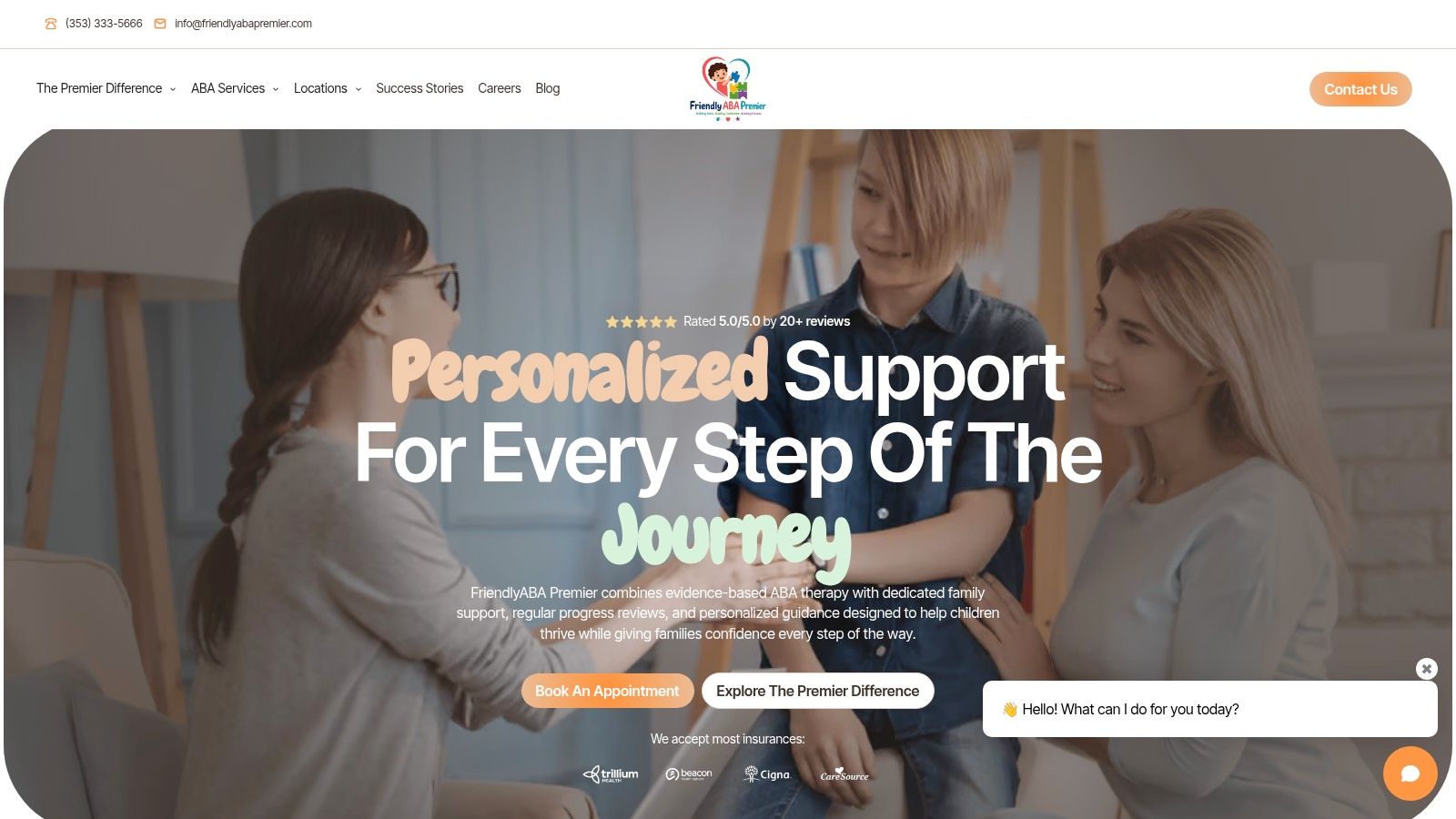
FriendlyABA Premier offers a more personalized alternative for families who want support coordinated around home life, school routines, and caregiver needs. Services are available across Connecticut, Georgia, Maryland, Massachusetts, North Carolina, South Carolina, Virginia, and Washington, with offerings that include home-based ABA, social skills development, school support, and parent coaching.
Each family is paired with a dedicated care coordinator who helps keep communication organized. Scheduled progress check-ins and individualized treatment planning can make it easier to understand what your child is practicing, how goals are changing, and what caregivers and educators can reinforce between sessions.
A useful fit for school-aged children
Home-based therapy can address routines such as getting dressed, communicating during meals, playing with siblings, or preparing for transitions. School support can extend that work into classroom participation, peer interaction, teacher communication, and other school-day needs. Families can also use school-based ABA support to better understand how therapy and educational planning may work together.
The main advantage is reduced coordination burden. Parents don't have to manage every conversation alone when a care coordinator helps connect clinicians, family members, and school teams. The tradeoff is that center-based or day-program availability may vary, and many services are delivered in the home or community rather than in a dedicated center.
FriendlyABA Premier may suit families who value frequent communication, hands-on guidance, and a treatment plan shaped around the child's strengths and daily environments. Ask whether services are available in your ZIP code, which settings can be supported, and how the provider handles communication with your child's school.
2. BlueSprig
BlueSprig is a large network with more than 150 centers across 18 states, according to its official location and services information. That broad footprint can make it a practical starting point for parents who want to search for a nearby center and compare center-based, home, school, and community services.
A center-based program may feel more like a school day, with structured transitions, planned activities, and opportunities to practice skills around other children. In-home therapy, when available, lets a child work on routines in the place where those routines naturally happen. Some families use both settings so a skill practiced in a center can also be used at home, in the community, or at school.
What changes from one location to another
BlueSprig's network includes affiliates such as Florida Autism Center and Trumpet Behavioral Health. Services can differ by center, including adolescent programming, in-home availability, schedules, and intake capacity. A broad network doesn't guarantee that the closest location has an opening or offers the exact setting your child needs.
Parents should ask:
- Location fit: Which services are offered at the center nearest your home?
- Setting options: Can therapy occur at home, school, or in the community as well as at the center?
- Family support: What parent education and progress updates are included?
- Insurance pathway: Who handles benefits checks, authorizations, and billing questions?
Insurance and access questions deserve early attention. Families comparing ABA therapy that accepts Medicaid near you should still confirm benefits and network participation directly with both the insurer and the provider, because coverage rules can vary by plan and state.
3. Hopebridge Autism Therapy Centers
Hopebridge focuses on center-based autism therapy and provides a center locator for families beginning a local search. Many locations offer structured schedules that resemble a school day, which may help parents who want therapy delivered in a predictable, classroom-like environment.
Some Hopebridge centers also provide diagnostic evaluations, occupational therapy, and speech therapy. Those services aren't available at every location, so families should treat the local center's offerings as the deciding information rather than assuming the full network menu applies everywhere.

A structured option for early learners
A school-like schedule might include arrival routines, group activities, communication practice, play, movement, and transitions. For a young child preparing for preschool or kindergarten, parents may want to know how the program teaches skills such as following a classroom direction, asking for help, waiting, sharing materials, and moving between activities.
That structure can be helpful, but it shouldn't replace individualized planning. The UCSD-published behavioral practice guidance describes treatment planning as carefully constructed and individualized. Ask how the team evaluates your child's communication, preferences, daily-living skills, and learning needs before setting goals.
A center with related services under one roof may simplify scheduling when those services are available. On the other hand, popular locations may have limited capacity, and access to diagnostics, occupational therapy, or speech therapy can differ by site. Request the current intake process and ask whether your child would receive coordinated communication across disciplines.
4. Centria Autism
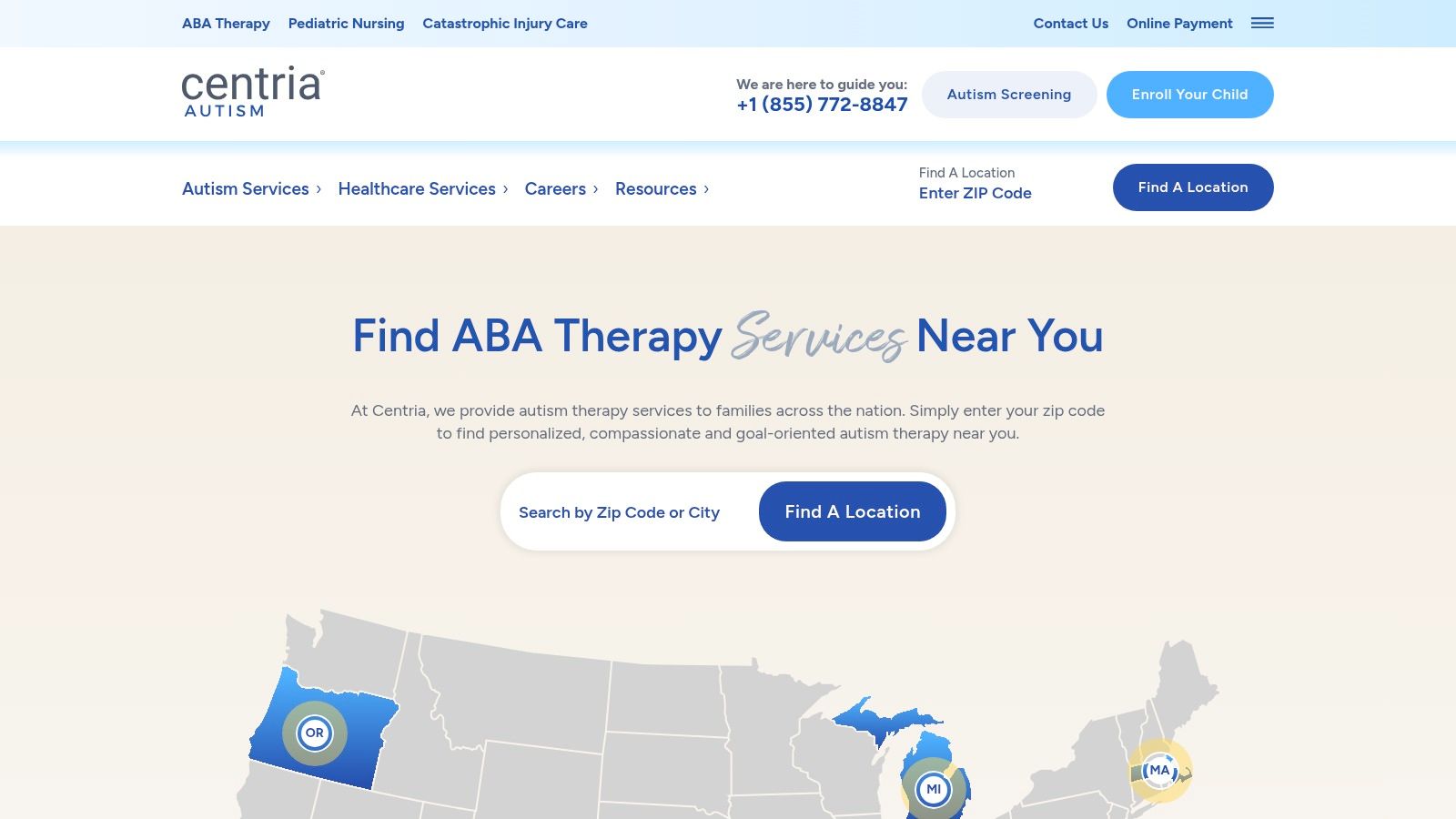
Centria Autism offers both in-home and center-based services, with a location finder designed to help families identify nearby options. In some markets, the organization also offers early-intervention support, autism screening, and diagnostic services.
For parents searching for an “ABA school,” Centria can represent a different kind of solution. A child may receive daytime in-home therapy rather than attend a center, or the family may combine home and center services when that better matches the child's schedule and goals.
Compare the setting with the skill
Home-based support can make goals immediately practical. A therapist might work on asking for a preferred snack, completing a morning routine, tolerating a change in activity, or using communication during play. Center-based sessions can provide different opportunities, such as practicing group participation, transitions, and interaction with peers.
The best setting depends on the child and the goals, not on a general ranking of home versus center therapy. Families considering center-based ABA therapy should ask how the provider helps children use skills outside the center. Families choosing home services should ask how the team will prepare the child for school routines and classroom expectations.
Centria's availability, center capacity, schedules, and diagnostic pathways differ by market. Before beginning an intake, confirm whether services are offered in your ZIP code, whether the provider works with your insurance, and whether a hybrid plan is possible. Ask who will coordinate communication if your child also receives support from a school, speech therapist, occupational therapist, or pediatrician.
5. LEARN Behavioral
LEARN Behavioral operates a network of regional providers with a location finder. Families may encounter different names within the network, including AST, BCI, Trellis, and Little Leaves. That network model can expand local choices, but it can also make the search feel less straightforward.
Programs may include center-based and in-home ABA, parent involvement, early learning, social skills, and school-readiness support. A preschool-like center can give children practice with arrival, group activities, classroom materials, transitions, and structured play. In-home services can help families apply related strategies during meals, bedtime preparation, sibling play, or community outings.
Look past the brand name
The regional provider's local practices matter more than the national network label. Ask who will supervise treatment, how often the family receives updates, whether caregivers participate in sessions, and how goals are adjusted when a child's interests or needs change.
A family-centered program should make the connection between therapy and everyday life clear. The Medicaid ABA Toolkit describes treatment planning that includes measurable goals for both the child and caregiver, baseline information, and a reassessment schedule. Those details can help parents distinguish a thoughtful plan from a generic list of activities.
Before choosing a LEARN-affiliated location, confirm the exact services offered by that regional brand. Ask whether the provider serves your child's age group, whether center and home options can be combined, and how the team communicates with educators. Local wait times and intake steps can differ even within the same broader organization.
6. Little Leaves Behavioral Services
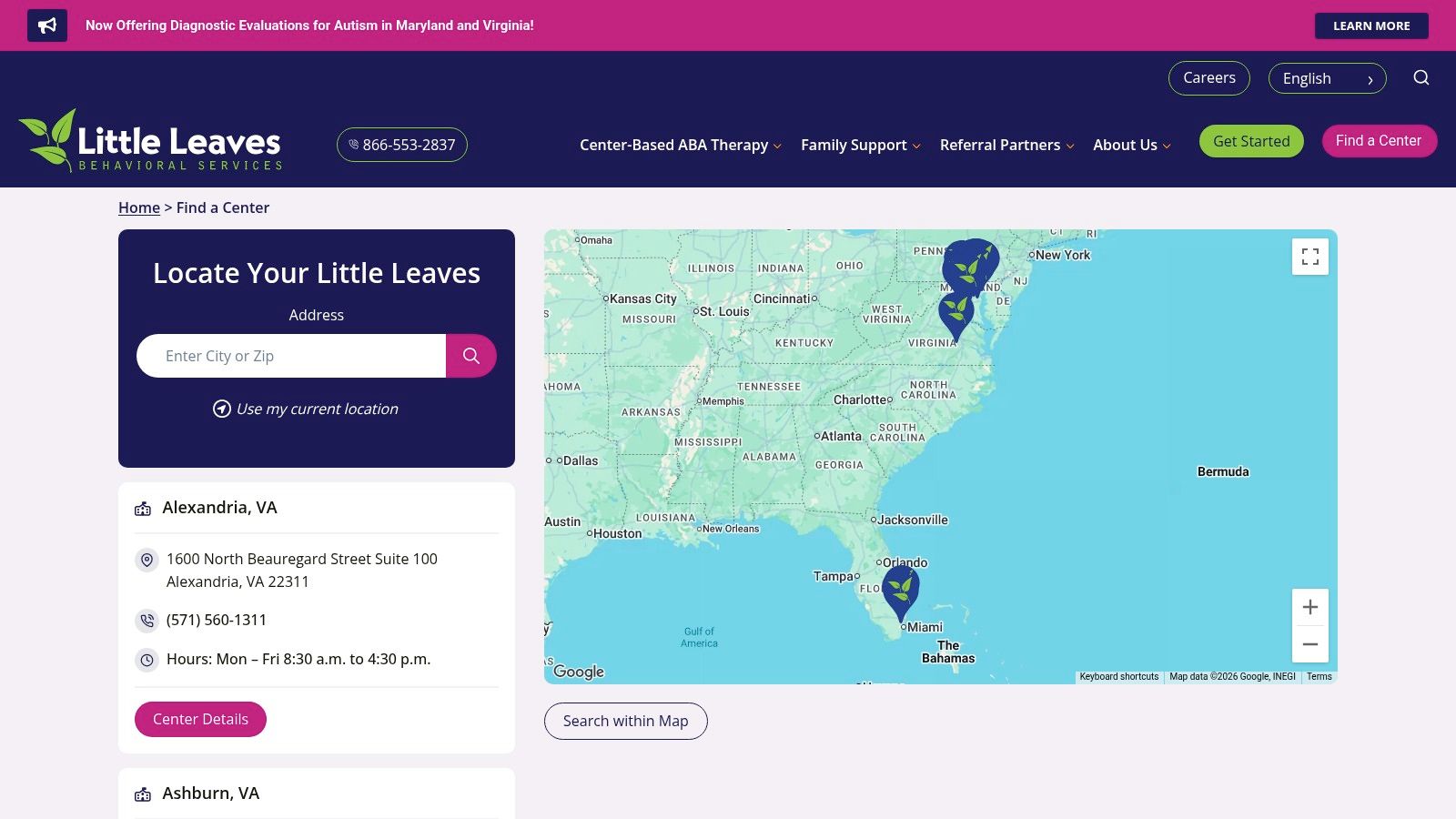
Little Leaves is designed for young children, with center locations in Maryland, Virginia, and Florida. Its preschool-like environments and full-day, center-based schedules make it one of the clearest matches for families who mean “ABA school” in the day-program sense.
The program focuses on early learning, communication, daily-living skills, and readiness for kindergarten. A structured day may give a child repeated opportunities to practice putting belongings away, joining a group, requesting help, following a visual routine, playing near peers, and moving from one activity to the next.
When a day-program model makes sense
This model may suit families looking for a consistent weekday schedule for a toddler or preschooler who needs substantial support before or during the transition to kindergarten. It's less likely to fit an older child who needs middle-school or high-school planning, or a family whose main priority is therapy in the home.
Parents should ask how the program individualizes classroom activities. Two children in the same room may have very different communication methods, sensory preferences, social goals, and independence targets. A strong intake process should identify those differences and translate them into specific goals.
Little Leaves has limited geographic availability compared with national networks. Confirm whether the nearest location serves your child's age and needs, whether transportation is available, how a full-day schedule interacts with school enrollment, and what happens when the child is ready for kindergarten. Ask how caregivers receive updates and how skills practiced in the center are supported at home.
7. ABS Kids
ABS Kids offers center-based and in-home ABA in selected regions, including California, North Carolina, South Carolina, Tennessee, and Utah, according to its official website. Its centers use classroom-like spaces and motor areas to help children practice skills that may later be needed in school.
Caregiver education is part of the model. That matters because a child's daily routines continue long after a therapy session ends. Parents may want coaching on how to support communication during play, encourage participation in household routines, or respond consistently when an activity changes.
A bridge between therapy and school routines
A mock classroom can help a child practice sitting near peers, following a group direction, handling materials, and shifting between activities. A motor space may offer opportunities to work on movement, play, and participation. Those environments can be useful, but parents should still ask how the team connects center practice to home and school.
Ask for the generalization plan: Find out how a skill learned in the center will be practiced at home, in the community, or in the classroom.
ABS Kids states that it accepts most major insurance plans and Medicaid or Medi-Cal where applicable. Families should verify their own plan's benefits, network status, authorization requirements, and expected out-of-pocket costs. Center capacity and schedules vary by city, and a location search alone won't tell you whether the program is currently accepting new clients.
Ask who trains caregivers, how progress is reviewed, and whether educators can receive relevant updates with appropriate consent. A provider may offer a well-designed center, but the practical fit depends on whether the schedule, location, staffing, and communication process work for your family.
Top 7 ABA Schools Comparison
| Provider | 🔄 Implementation complexity | ⚡ Resource requirements | ⭐📊 Expected outcomes | 💡 Ideal use cases |
|---|---|---|---|---|
| FriendlyABA Premier | 🔄🔄🔄, High-touch coordination and school collaboration | ⚡⚡⚡, Dedicated coordinator reduces family burden | ⭐⭐⭐⭐, Strong individualized gains and school transfer | Families needing hands-on guidance, school collaboration, in‑home care |
| BlueSprig (incl. affiliates) | 🔄🔄🔄, Large network, variable local processes | ⚡⚡, Mix of center/home options; travel/waitlist varies | ⭐⭐⭐, Good skill generalization when available locally | Families seeking nearby centers and mixed delivery settings |
| Hopebridge Autism Therapy Centers | 🔄🔄, Center-focused with structured schedules | ⚡⚡, Efficient center model; diagnostics available at select sites | ⭐⭐⭐⭐, Improved school-readiness where integrated services exist | Families wanting center-based therapy with OT/ST options |
| Centria Autism | 🔄🔄, Hybrid models and early-intervention pathways | ⚡⚡⚡, Flexible (in-home + center) supports daytime/hybrid needs | ⭐⭐⭐⭐, Strong early-intervention outcomes in served markets | Families preferring hybrid/home schedules or early screening/diagnostics |
| LEARN Behavioral | 🔄🔄🔄, Network of regional brands; varied local procedures | ⚡⚡, Multiple brand options increase access but vary by region | ⭐⭐⭐⭐, Measurable, family-centered outcomes when engaged | Families wanting family-focused ABA across multiple regional providers |
| Little Leaves Behavioral Services | 🔄🔄, Purpose-built full-day, preschool-like centers | ⚡, Intensive center program; limited geographic reach | ⭐⭐⭐⭐⭐, High kindergarten-readiness and communication gains | Families seeking ABA day-school model for toddlers/preschoolers |
| ABS Kids | 🔄🔄, Center and in-home mix with caregiver training | ⚡⚡, Classroom-like centers aid generalization; insurance varies | ⭐⭐⭐, Effective caregiver-led generalization where available | Families seeking school-like centers plus caregiver education |
Turn Your Shortlist Into a Confident Next Step
Start with your child's daily life, not just a list of provider names. Write down the routines that matter most right now, such as communicating needs at meals, preparing for school, joining play, completing hygiene steps, managing transitions, or participating in classroom activities. These notes can help each provider explain whether its setting and treatment approach match your priorities.
Next, confirm which programs serve your state and ZIP code. Compare center-based, home-based, school-based, and hybrid options. A nearby center may be convenient, while in-home therapy may better address routines that are difficult at home. School collaboration may matter most when your child's biggest challenges appear during classroom participation, teacher communication, or peer interaction.
Ask each provider how it develops individualized goals. A BCBA should be able to explain what assessment information informs the plan, how your child's preferences are considered, and how progress is reviewed. The Autism Speaks ABA guidance recommends asking about insurance coverage, benefits, and help with the intake evaluation.
A current waitlist estimate is part of provider fit. Ask whether the program is accepting new patients, what steps come before an opening, and whether the estimate applies to assessment, treatment, or both.
Clarify insurance and intake details before assuming a program is accessible. Ask who verifies benefits, who requests prior authorization, what documentation is needed, and whether the provider can explain expected family costs. You can also ask about staff qualifications, supervision, assessment tools, billing, and authorizations. A provider-selection guide from Find ABA Therapy identifies these as practical questions for families comparing care.
Bring your pediatrician, educators, and existing care team into the conversation when appropriate. Their observations can add useful context, especially when your child behaves differently at home, in school, and in community settings. A consultation doesn't commit you to a program. It gives you a chance to see whether the provider listens carefully, communicates clearly, and can support your family's priorities.
FriendlyABA Premier provides home-based ABA, social skills support, school support, parent coaching, and a dedicated care coordinator in its service states. If personalized planning and regular communication are important to you, ask whether its team can support your child's needs and collaborate with your school.
FriendlyABA Premier helps families compare practical ABA options by combining individualized home-based therapy, school support, social skills development, parent coaching, and a dedicated care coordinator. Visit Friendly ABA Premier to learn whether services are available in your area and schedule a conversation about your child's support needs.
Our Latest Insights






















Experience ABA Therapy with a More Personalized Level of Support
Discover how FriendlyABA Premier combines evidence-based ABA therapy with dedicated coordination, proactive communication, and individualized family support.